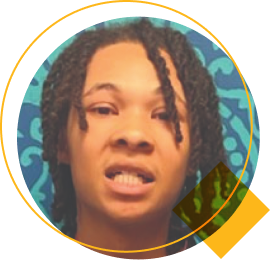
Before coming to Nexus Health Systems, Mario’s life was defined by instability. Diagnosed with schizophrenia, he struggled with medication compliance, poor hygiene, aggression, and disrupted sleep. Auditory hallucinations, mostly negative, self-deprecating voices, told him to harm himself or others. He was in and out of the ER, frequently running from placements, and nearly impossible to stabilize. Distressing visual and auditory hallucinations, including voices that told him to harm himself and others. In severe psychosis and largely unmedicated, he exhibited aggression that was uncharacteristic of who he really was. He wasn’t sleeping or bathing. After repeated runaways and ER visits, he was admitted to an adult psychiatric unit for four months because no one else would take him.
Finding care for Mario was a battle. At 17, his age and schizophrenia diagnosis narrowed the options. “We had difficulty with any in-state facilities that would take him,” said Beth Stonefield, MSW, MA, LCSW. “He was so close to 18, and we don’t really have that many in Missouri that will take him after 18.” After a search that extended out of state, Mario was admitted to the True North Program.
The move wasn’t easy at first. “He wasn’t wild about all the rules or the structure,” Beth recalled. “But he adapted really quickly.” His care team monitored him closely, adjusting his medications over time to reduce side effects and improve consistency.
A full psychological evaluation — something previous providers hadn’t been able to complete — revealed an intellectual disability and a lower IQ than anticipated. This discovery was a turning point. While Mario could repeat instructions from memory, he may not have truly understood his treatment.
With that insight, staff found new ways to explain his care, and Mario began to genuinely engage in his treatment. “He seems to have a much better grasp on what is going on,” said Beth.
His participation in therapy evolved as well. Early on, he was just going through the motions, sometimes leaving sessions early due to disinterest. Over time, that changed. He began internalizing what he was learning. His auditory hallucinations quieted to something more manageable, “like static” rather than voices. He also learned to recognize the hallucinations as internal stimuli and how to use coping mechanisms to manage them.
Of all the therapies offered at Nexus, vocational rehabilitation was Mario’s favorite. He wanted to work, to keep his hands busy, to feel productive. He expressed early on that he wanted a job on campus, and his team made it happen. Mario began working in the gift shop and was named Employee of the Month in his first month. When he transitioned to a dishwashing role in the dietary department, his “dream job,” as Beth described it, he earned the title again.
The changes extended far beyond clinical milestones. Mario built friendships, joined the Buddy Club — where his peers recognized his friendliness — and began going on outings to restaurants and shops with peers. And during a routine check-in call, something remarkable happened: Mario laughed at a joke. Then he told one of his own.
“I don’t know that I’d seen Mario smile or laugh in the two years I’ve known him,” said Beth. “I think that’s a direct reflection of what Nexus has done for him.”
Mario has moved on to the next chapter of his journey. He understands why he needs his medication and takes it willingly. His aggressive episodes have all but stopped. He has friends, routines, and a sense of pride that didn’t exist before Nexus. While he still faces the lifelong challenge of managing schizophrenia and intellectual disability, he is no longer defined by his diagnosis.